Almost all intercontinental internet traffic travels not by satellite but through fibre-optic cables on the seabed, some no thicker than a garden hose. For large continents with many landing points, a single cable cut is an inconvenience. For an island nation with one or two cables, it can silence banking, government, hospitals and ordinary communication in minutes.
Malta, Pacific island states, Caribbean nations and remote territories all share the same geography of risk: surrounded by water, dependent on what lies beneath it. Readers who follow our technology coverage will know how often a dragged anchor or fishing trawler, not sabotage, is the cause when a cable fails.
One Cable, One Point of Failure
Redundancy is the obvious answer and the expensive one. A new subsea cable costs hundreds of millions of dollars, and small island markets struggle to justify two systems on commercial terms alone. Many governments therefore treat a second cable as national infrastructure, seeking development funding, regional partnerships or landing commitments from the large technology firms now building many new systems.
Route diversity matters as much as cable count. Two cables landing at the same beach, sharing the same shallow approach, can be cut by the same anchor. Planners now separate landing stations, bury cables deeper near shore, and mark protection zones where anchoring and trawling are restricted.
Repair Is a Slow Business
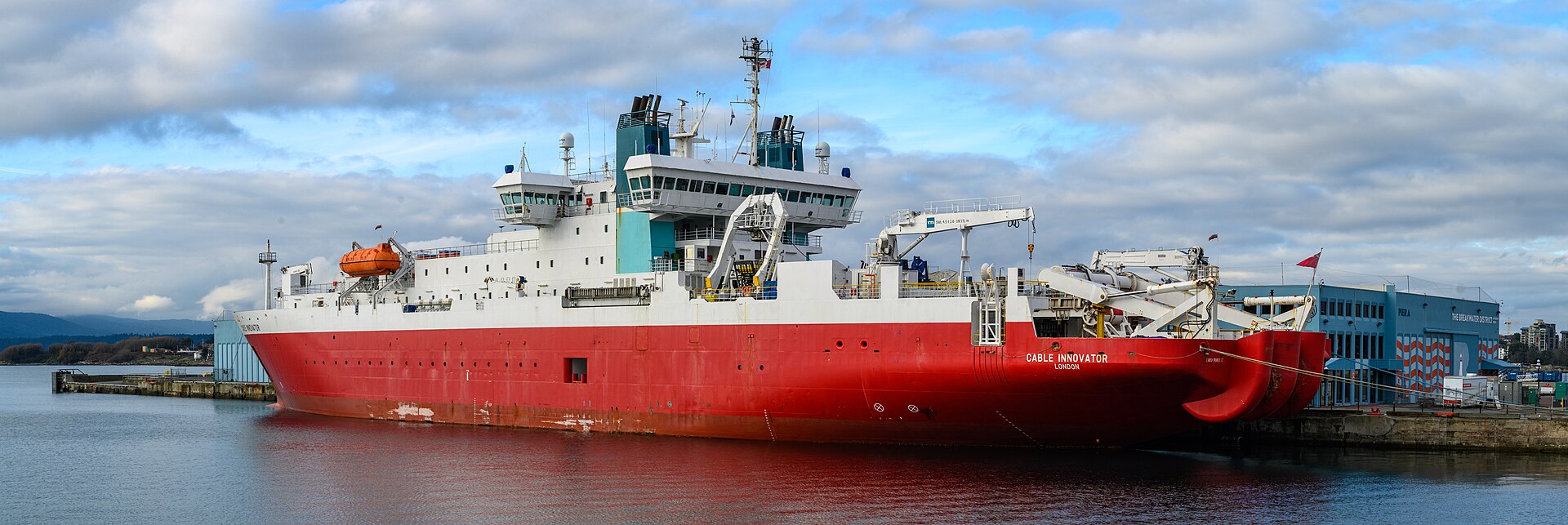
When a cable breaks, a specialised repair ship must find the fault, haul the cable from the seabed, splice it and lay it back — work that depends on weather, permits and the small global fleet of cable vessels. Repairs can take days in the Mediterranean and weeks in the remote Pacific, where a ship may sail for a long time before work even begins.
Organisations such as the International Cable Protection Committee, referenced by the BBC in coverage of cable incidents, estimate that most faults come from fishing and anchoring. Natural hazards matter too: the 2022 Tonga eruption severed that kingdom’s only international cable and demonstrated how completely an island can be cut off.
Satellites as Backup, Not Replacement
Low-earth-orbit satellite services now give islands a fallback that did not exist a decade ago. Governments and telecoms firms buy satellite capacity to keep essential services running during repairs. But satellite bandwidth remains a fraction of a modern fibre cable’s capacity and costs far more per bit, so it is lifeboat, not ship.
Meanwhile demand keeps rising with streaming, cloud computing and artificial intelligence workloads. New cable designs pack more fibre pairs into the same sheath, multiplying capacity without multiplying risk — although a cut then removes more capacity at once, sharpening the resilience debate.
Geopolitics has added urgency. Several recent cable incidents in contested waters have prompted investigations and naval patrols, even where accidents remained the likeliest explanation. Governments now review who owns landing stations, who maintains the network and how quickly spare capacity can be activated. Island leaders have begun raising cable security in regional forums once reserved for fisheries, ports and conventional maritime safety.
On land, the landing station is becoming critical infrastructure in its own right, with backup power, diverse road access and physical security planned like a small power station. Training local engineers matters equally: an island that can diagnose a fault, manage a landing and coordinate a repair without waiting for fly-in specialists recovers faster and negotiates better with the global firms that own the cables.
The Bottom Line
Island nations are learning to treat connectivity like water or electricity: essential, vulnerable and worth public investment in backup routes. The cables will only become more important, which makes protecting them — and planning for their failure — a defining infrastructure task, much as adapting to a warming sea is for the fisheries in our report on Mediterranean marine heatwaves.